
Data recovery isn’t just an IT function.
It’s a business safeguard.
Every modern business runs on data. Client communications. Financial systems. Cloud applications. Internal files. Industry software.
When that data becomes unavailable — whether from ransomware, hardware failure, accidental deletion, or a natural disaster — operations don’t slow down. They stop.
At Future Link IT, we approach disaster recovery with one objective: keeping your organization operational when something unexpected happens. Because recovery should be a controlled process — not a scramble.
The Real Cost of Downtime
Most companies think about data loss in terms of missing files. The real impact goes deeper.
When systems go down:
-
Employees lose productivity
-
Customers experience delays
-
Revenue stalls
-
Compliance risks increase
-
Reputation takes a hit
Even a few hours offline can disrupt workflow and customer trust. Extended downtime can take months to fully recover from — not just financially, but operationally.
A structured disaster recovery strategy backed by secure, tested data recovery systems protects more than information. It protects continuity.
What Data Recovery Actually Covers
There’s a common misconception that data recovery simply means restoring a deleted file.
In reality, it includes:
-
Recovering data from failed servers and storage devices
-
Restoring systems after ransomware or cyberattacks
-
Rebuilding corrupted databases
-
Recovering cloud environments
-
Retrieving lost or overwritten backups
If your backup systems aren’t automated, encrypted, and regularly tested, there’s no guarantee they’ll perform when you need them most.
That’s why planning matters.
The 6 Pillars of an Effective Disaster Recovery Strategy
A reliable disaster recovery plan doesn’t happen by accident. It’s built intentionally, based on risk, infrastructure, and operational priorities.
Here’s how we approach it.
Identify Real Risks
Every business faces different threats.
Cybercrime. Power outages. Aging hardware. Natural disasters. Internal mistakes.
We evaluate your infrastructure, security posture, and operational dependencies to pinpoint where you’re most exposed.
Then we prioritize based on impact.
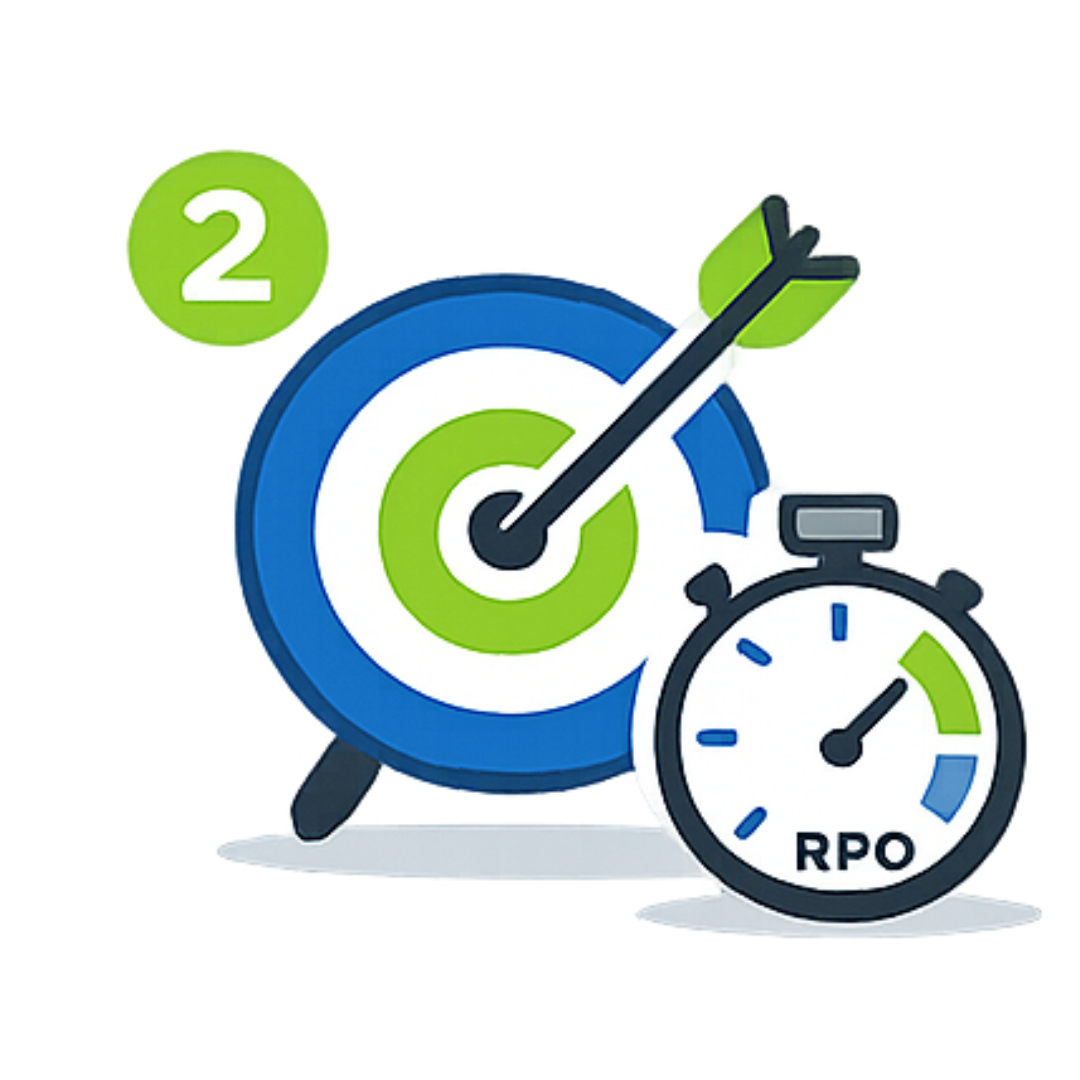
Define Recovery Time & Recovery Point Goals
How long can your systems be offline?
How much data can you afford to lose?
These are your:
- RTO (Recovery Time Objective) – how fast you need to be back up
- RPO (Recovery Point Objective) – how much data loss is acceptable
If you don’t define these, recovery becomes guesswork.
Build the Right Backup Strategy
Not all backups are equal.
We design layered systems that may include:
- Encrypted cloud backups
- Local device backups
- Image-based server backups
- Offsite redundancy
- High availability systems for critical operations
The goal is simple: if one layer fails, another takes over.

Document the Plan Clearly
In a crisis, clarity matters.
Your disaster recovery plan should outline:
- Who is responsible for what
- How systems get restored
- Communication protocols
- Escalation procedures
No confusion. No scrambling.

Test Everything
Backups that aren’t tested aren’t backups.
We run recovery simulations and validation testing to confirm your systems restore properly. If something breaks during testing, we fix it before a real emergency exposes it.

Keep It Updated
Your business evolves. Your technology changes.
Your recovery strategy needs to evolve with it.
We continuously review backup performance, security posture, infrastructure updates, and emerging threats to keep your recovery plan aligned with reality.
Why Businesses Partner with Future Link IT for Data Recovery
We don’t treat disaster recovery as a compliance requirement or a checklist item. We treat it as operational insurance.
Our team works alongside leadership to:
-
Reduce downtime exposure
-
Strengthen cybersecurity defenses
-
Design secure backup systems
-
Shorten restoration timelines
-
Protect revenue continuity
The goal isn’t just restoring data. It’s maintaining business stability under pressure.
Build the Plan Before You Need It
Most organizations start thinking about data recovery after something goes wrong.
The stronger approach is preparation.
If your business doesn’t have a documented, tested disaster recovery plan in place — or if it hasn’t been reviewed recently — now is the time to address it.
Future Link IT helps businesses implement structured, secure data recovery solutions that keep operations moving, even when disruptions occur.
Let’s build a recovery strategy that protects your data — and your business.
Talk with Future Link IT about building a data recovery plan that keeps your business running — no matter what happens.
Frequently Asked Questions
What is data recovery?
Data recovery is the process of restoring lost, corrupted, or inaccessible data from backups, servers, devices, or cloud systems after failure, cyberattack, or accidental deletion.
How long does data recovery take?
Recovery time depends on your Recovery Time Objective (RTO), system complexity, and backup structure. With a strong disaster recovery plan, restoration can take hours instead of days.
What causes data loss?
Common causes include ransomware, hardware failure, human error, software corruption, natural disasters, and power outages.
How often should backups be tested?
Backups should be tested regularly — typically quarterly at minimum — and anytime major system changes occur.